Best Time to See Northern Lights in Murmansk: Month-by-Month Guide

Planning a trip to see the Northern Lights in Murmansk? The first question is usually the same: Which month should I go?
The core Murmansk Northern Lights season runs from October to March, although sightings can also be possible from late September as the nights become darker.
But there isn't one magical month that guarantees the Aurora.
If you want the classic snow-covered Arctic experience, November is one of our favourite months and so in February, which comes with a lot of snow. If you want snow along with more daylight for exploring, March offers a great balance. October is comparatively milder, while December and January give you a much deeper Arctic-winter experience.
The right month therefore depends not just on the Northern Lights — but on the kind of Murmansk trip you actually want.
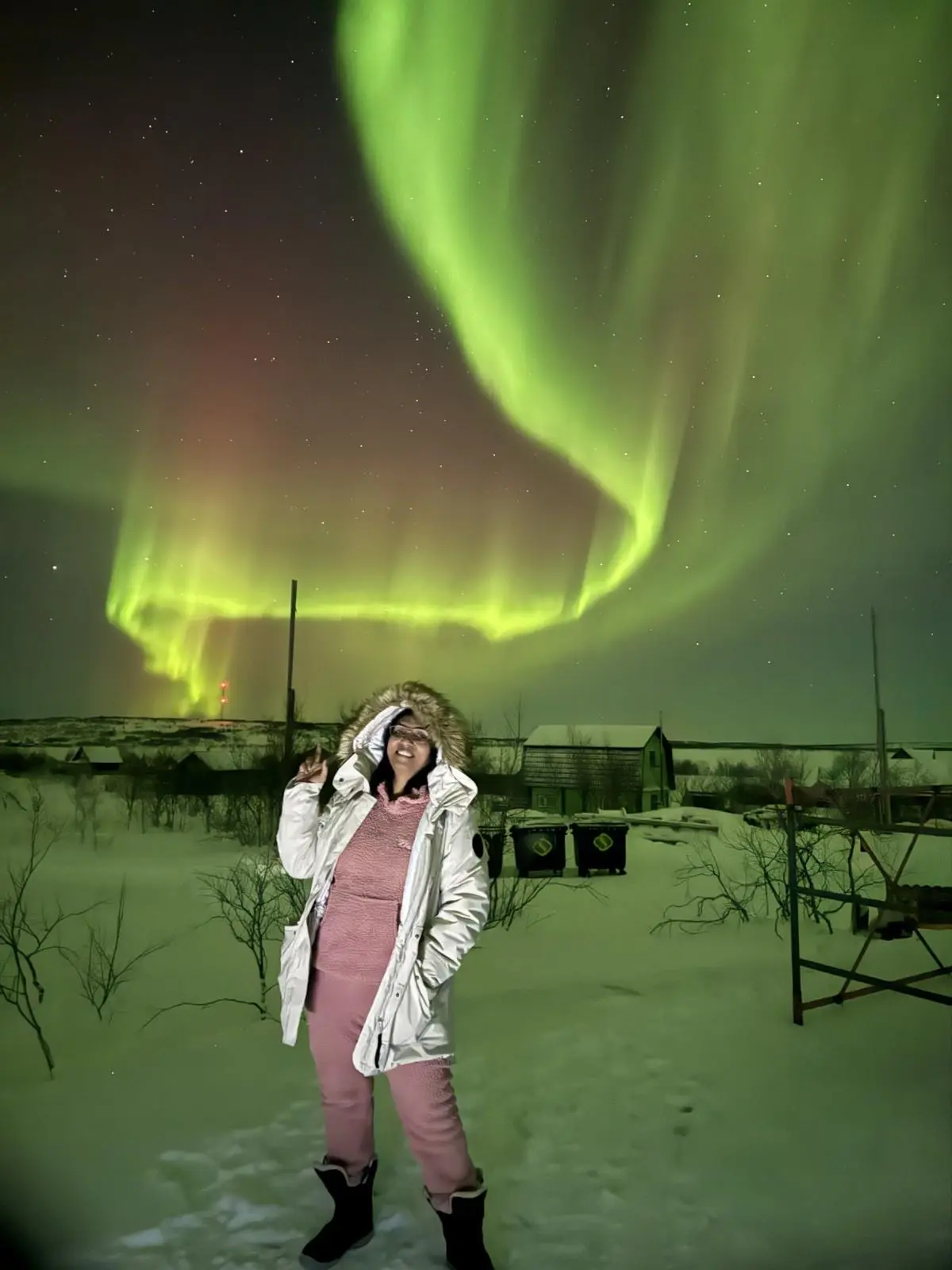
So, What Is the Best Month to See Northern Lights in Murmansk?
If we had to recommend months based on the overall experience, rather than simply the possibility of an Aurora sighting, this is how we would look at it:
| If you want... | Consider |
|---|---|
| A classic snowy Arctic experience | February |
| Snow + more daylight for sightseeing | March |
| Relatively milder conditions | October |
| Early winter + long nights | November |
| Polar night + festive Arctic atmosphere | December |
| Deep Arctic winter | January |
| An early-season Aurora trip | Late September |
February is often our pick for travellers who have pictured Murmansk covered in snow, with proper winter activities and long evenings for Aurora hunting.
But remember: no month guarantees the Northern Lights. The Aurora is a natural phenomenon driven by space-weather conditions, while what you can actually see from the ground also depends heavily on local skies.
That is why we would always choose multiple nights in the Aurora zone over trying to identify one supposedly “perfect” date.
When Is the Northern Lights Season in Murmansk?
October to March is the main season we recommend for a Northern Lights trip to Murmansk. Late September can work too, but you may not get the snowy landscapes and winter activities that most travellers associate with Arctic Russia.
Seeing the Aurora requires more than simply travelling during winter. You need sufficiently dark skies, favourable auroral activity and, importantly, a clear enough view of the sky.
This is why Aurora hunting is different from ordinary sightseeing.
You don't simply book a 9 PM attraction and know exactly what you're going to see. Your guide may monitor conditions, wait, drive outside brighter areas or change the timing of the hunt.
Our own Murmansk itineraries keep Aurora-hunting plans flexible according to conditions rather than fixing everything rigidly to one evening.
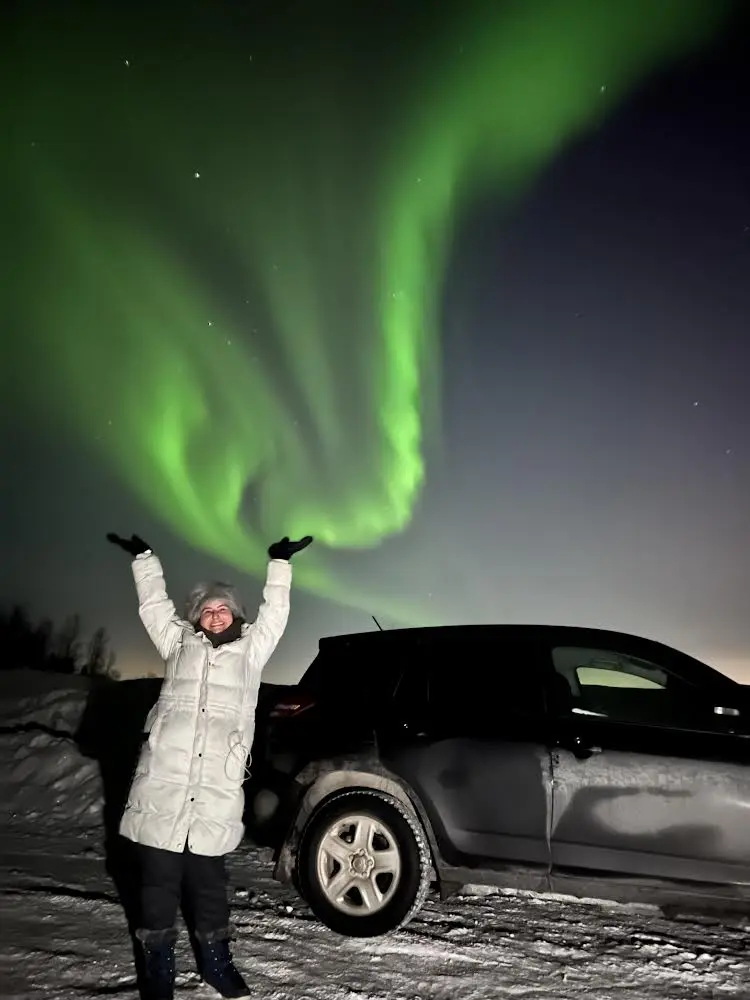
Northern Lights in Murmansk: October to March
Northern Lights in Murmansk in October
October is a good option for travellers who want dark nights but aren't excited about the harshest winter temperatures.
The trade-off is snow.
Some years may have more snow than others, and certain snow-dependent activities may not yet be operating. Your existing Murmansk guide already notes that experiences such as husky and reindeer rides can be limited early in the season.
So October works particularly well if seeing the Aurora is more important to you than getting the picture-perfect white Arctic landscape.
Think darker nights and comparatively milder conditions — but a less predictable winter aesthetic.
Northern Lights in Murmansk in November
By November, Murmansk starts feeling much more like the Arctic winter most travellers imagine.
The nights are longer, snow becomes more likely and the destination begins shifting into proper winter mode.
It's also a month that shows why flexibility matters while Aurora hunting.
On our November Murmansk itinerary, the first Northern Lights hunt can be moved according to conditions. The hunt itself may last around four to five hours, and travellers spend several days in Murmansk rather than relying on one evening.
For travellers who want winter atmosphere without going quite as deep into the season as January or February, November is a very good middle ground.
Northern Lights in Murmansk in December
Second half of December is one of the most unusual times to experience Murmansk because the city enters polar night.
At Murmansk's latitude, the polar-night period runs roughly from mid-December into January, when the sun doesn't rise above the horizon. That doesn't mean the entire day is pitch black — there are still hours of twilight.
It creates an incredible Arctic atmosphere: snow, blue twilight, very long nights and the festive period around New Year.
And an important correction to a common misconception:
Polar night does not mean solar activity becomes weaker.
Auroral activity is connected to solar and geomagnetic conditions; polar night simply gives Murmansk far more darkness during which an Aurora could potentially be visible.
December is therefore a fascinating month for the overall Arctic experience — just not a guaranteed Aurora month, because no month is.
Northern Lights in Murmansk in January
January is for travellers who want proper Arctic winter.
Expect long periods of darkness, snowy landscapes and very cold conditions. As January progresses, Murmansk also emerges from its polar-night period.
The advantage of travelling this deep into winter is that you're no longer coming only for the sky.
You can build the trip around the entire Arctic experience.
Your Travel Genie has previously operated January itineraries combining Aurora hunting with experiences such as glass-igloo stays, Arctic floating and visits connected with Sámi culture, reindeer and huskies.
If extreme cold doesn't scare you, January can be spectacular.
Is February the Best Month for Northern Lights in Murmansk?
February is one of our favourite months for the overall Murmansk winter experience.
Notice the wording: overall experience.
We're not saying that an Aurora somehow becomes guaranteed because your flight ticket says February.
What makes February attractive is the combination of snow-covered landscapes, long evenings, established winter conditions and enough daytime to enjoy the Arctic beyond the Northern Lights.
This is also when Murmansk looks much closer to what most first-time travellers imagine: white landscapes, winter activities, igloos and proper Arctic scenery.
If someone told us:
“I only have one Murmansk trip in me. I want snow, winter activities and Aurora hunting.”
February would be high on our list.
Just don't underestimate the cold. You'll spend part of your Aurora hunt standing still outdoors at night — very different from walking around during the day.
Northern Lights in Murmansk in March
March is another month we particularly like because it gives travellers a better balance between Aurora hunting and daytime exploration.
The nights are still dark enough for Northern Lights hunting, while increasing daylight gives you more time to experience Murmansk and the surrounding Arctic landscapes during the day.
Snow can still create the winter scenery you've travelled for, without the extreme lack of daylight associated with December.
Our March itineraries have combined several days in the Murmansk region with Aurora hunting and a glass-igloo stay, while keeping some Arctic activities interchangeable depending on conditions.
So if you'd like the winter experience but don't necessarily want to travel during the darkest period, March is a strong choice.
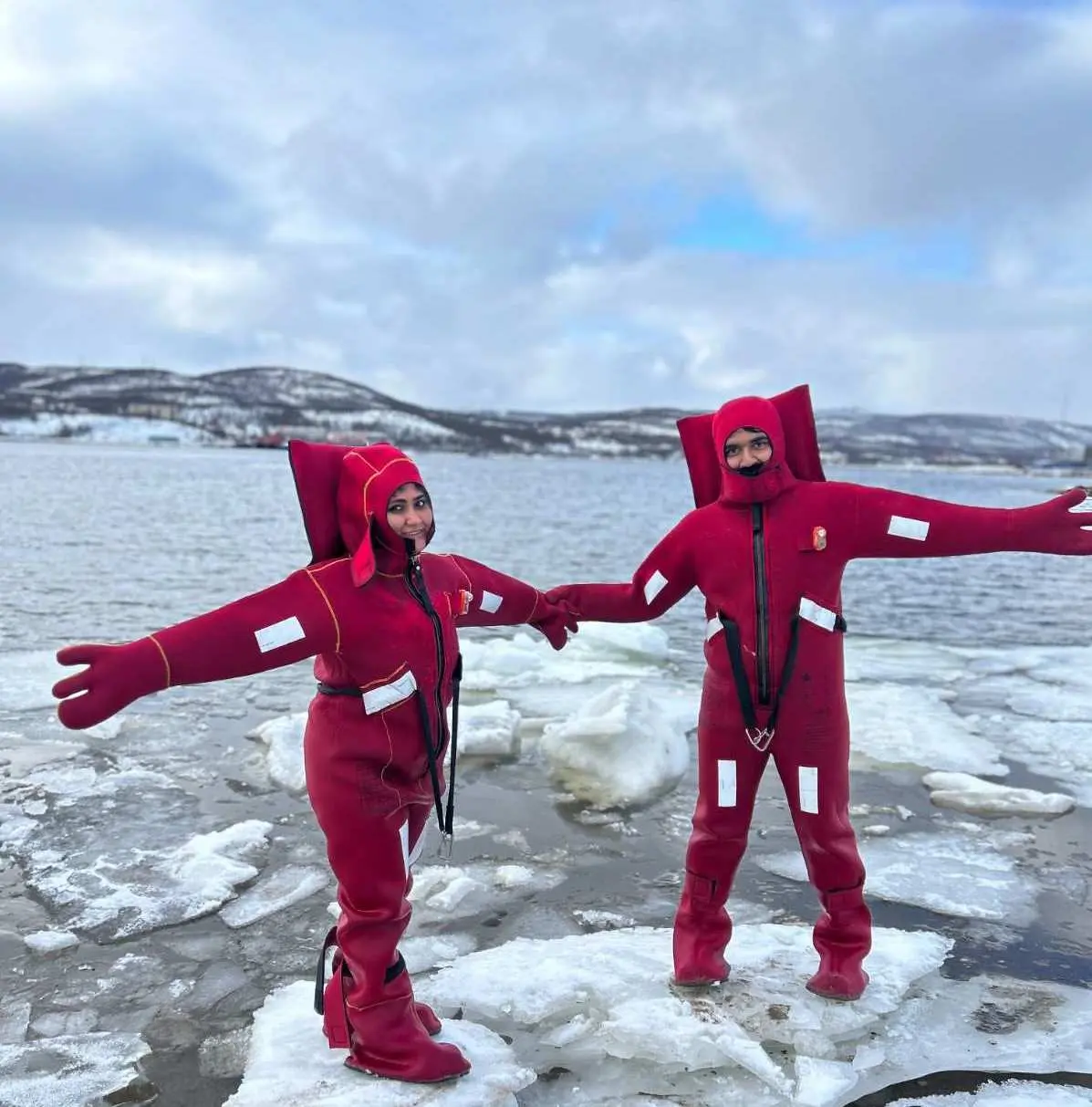
Which Month Should You Choose?
Still confused? Make the decision based on the trip, rather than trying to outsmart the Aurora.
If you want snowy, classic Murmansk, we'd lean towards February.
If you want snow plus more daylight, look at March.
If you don't want the depths of Arctic winter, consider October.
For the polar-night experience and festive atmosphere, December is unlike anything most Indian travellers have experienced before.
And if you want Murmansk in full deep-winter mode, January or February should be high on your list.
There isn't one universally perfect month.
There is a month that better suits your version of the trip.
What We've Learned From Taking Travellers Aurora Hunting in Murmansk
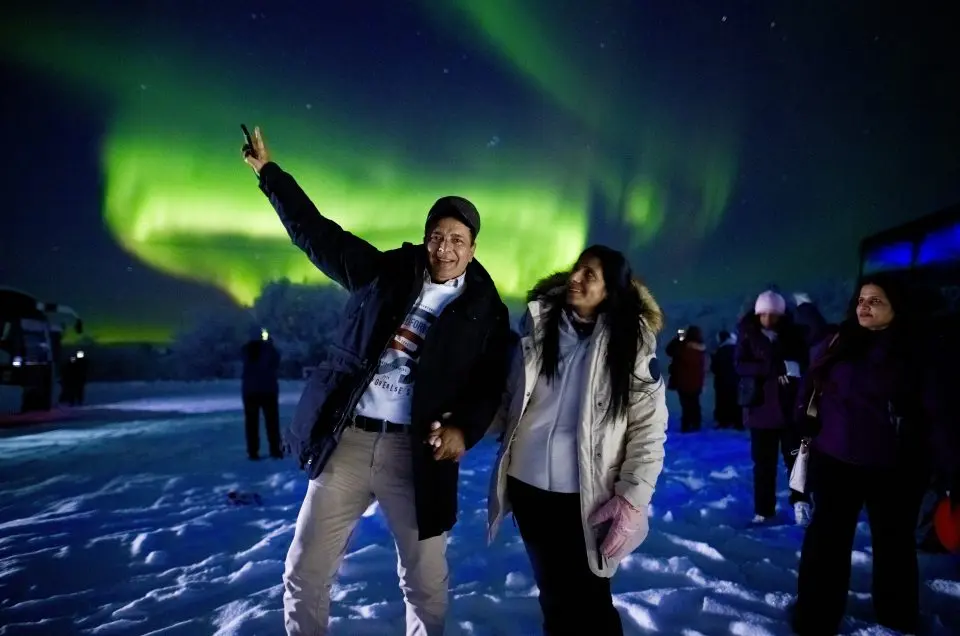
After running Northern Lights trips to Murmansk for years, one lesson matters more than almost anything else:
Don't depend on one night.
Aurora hunting is unpredictable.
You may head out and see nothing immediately. You may wait. Your guide may monitor the skies. You may need to drive. The conditions on your second or third evening can look completely different from the first.
It's exactly why our Murmansk itineraries have historically kept travellers in the region for several days. One current itinerary, for example, includes five days in Murmansk, an Aurora hunt that can run for four to five hours, a photographer during the hunt and another possible Aurora opportunity from the glass-igloo stay.
We've also learned something else:
The Aurora shouldn't be the only reason your trip matters.
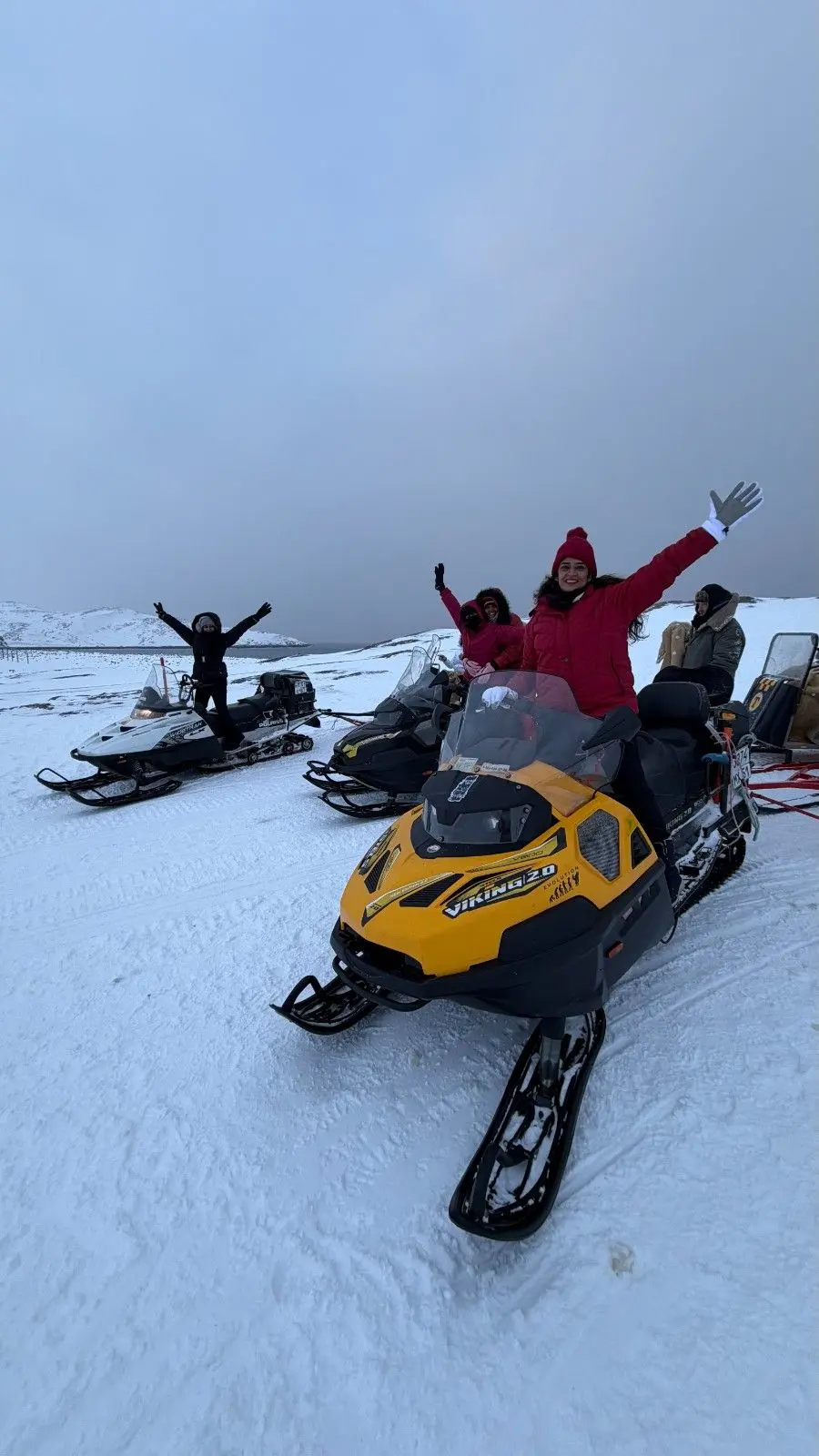
Murmansk is the Arctic Ocean, snow-covered landscapes, Teriberka when conditions permit, Sámi experiences, reindeer, huskies, glass igloos, frozen roads and temperatures that make Indians question every life decision that brought them there.
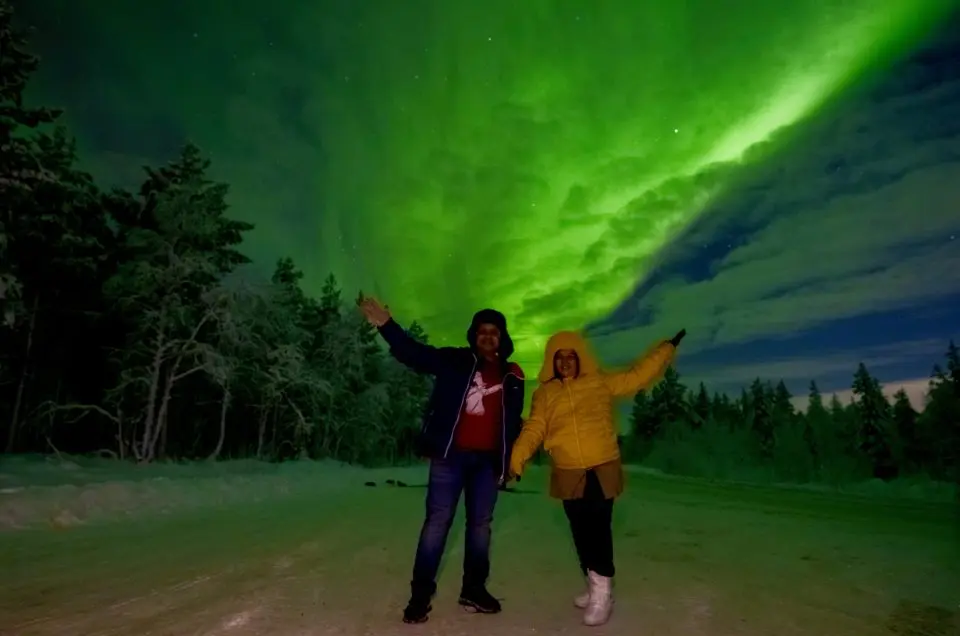
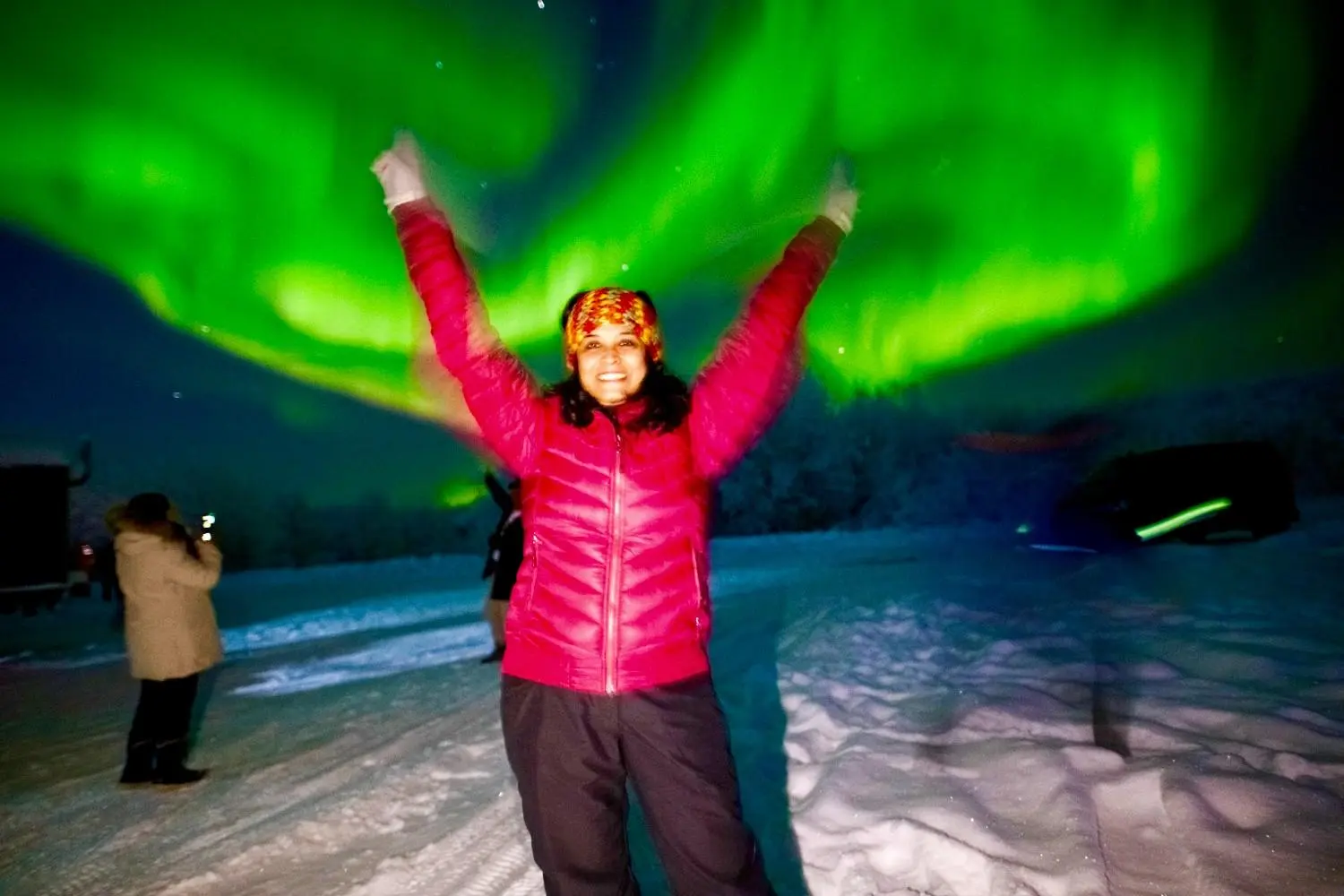
And then, if the sky lights up?
That's the moment that ties the whole trip together.
How Many Nights Should You Spend in Murmansk?
If seeing the Northern Lights is one of your main reasons for travelling, don't build the trip around one night.
One night gives you one chance at suitable weather and sky conditions.
Multiple nights give you more opportunities.
This is why our own Northern Lights itineraries spend several days in the Murmansk region and allow Aurora-hunting plans to change according to conditions.
It still isn't a guarantee.
It's simply a much smarter way to plan an Aurora trip.
Planning Your Own Northern Lights Trip?
Explore our Murmansk Northern Lights Tour from India and see our upcoming Arctic departures.
FAQs About the Best Time to See Northern Lights in Murmansk
What is the best month to see Northern Lights in Murmansk?
There is no guaranteed best month for an Aurora sighting. For the overall snowy Arctic experience, February is one of our favourite choices. March is excellent if you want winter scenery with more daylight, while October suits travellers looking for comparatively milder conditions.
Can you see Northern Lights in Murmansk in September?
Yes, sightings can be possible as nights become darker towards the end of September. However, October to March is the stronger core travel season, particularly if you also want snow and winter activities.
Is December good for Northern Lights in Murmansk?
December has exceptionally long periods of darkness because Murmansk experiences polar night, making it a unique time to visit. But darkness alone doesn't guarantee an Aurora — local cloud conditions and geomagnetic activity still matter.
Is February the best time to visit Murmansk?
It is one of our preferred months for the complete winter experience because of the combination of snow, long evenings and winter activities. That doesn't mean February guarantees stronger Northern Lights than every other month.
Can you see Northern Lights in Murmansk in March?
Yes. March remains a good time for Aurora hunting while offering increasing daylight for daytime experiences, which is why it can be a particularly attractive month for travellers who want both.
Are the Northern Lights guaranteed in Murmansk?
No — and you should be wary of anyone who guarantees them.
The best approach is to travel during the right season, spend multiple nights in the region, remain flexible and give yourself several opportunities to hunt for the Aurora.
Ready to Chase the Northern Lights in Murmansk?
We've been taking Indian travellers to Murmansk and Arctic Russia for years, and one thing has shaped the way we plan these trips: give the Aurora more than one chance. Your Travel Genie describes Northern Lights tours to Russia as one of its signature offerings and has operated these Arctic routes across multiple winter departures.
Our trips combine several days in the Murmansk region with Aurora hunting and Arctic experiences such as glass-igloo stays, while keeping parts of the schedule flexible according to conditions.
No comments yet. Be the first to start the conversation!